Gain the storytelling clarity you seek by having all your notes in one connected system — Meet the Storyteller OS.

The 5 Forces That Make Stories Impossible to Put Down
You're using one. The stories readers can't put down quietly stack all five of these forces.

Written by Kevin Barrett
share




🔥 Why this guide exists
No mind was built to hold an entire novel at once. StoryFlint turns the chaos in your head into a story you can see and control — frameworks to order your thinking, and the Storyteller OS to order your project. Bring us the mess.
share
Most writers have one engagement tool: plot. Add a twist. Kill a character. Raise the stakes.
That's not layering — that's just turning the same dial louder.
The stories readers genuinely can't put down aren't louder. They're quietly stacking five completely different forces at once. And most writers are only firing on one.
Force 1: A Premise That Generates Its Own Questions
Most premises are a one-time setup. You drop characters into a situation, then spend the rest of the story figuring out what happens next.
Rick and Morty solved this by designing a multiverse — a premise that contains infinite premises within it. "Rick and Morty's allure is that it has created a premise that in and of itself allows it infinite premises."
Characters can only be as interesting as the premise they're set in. If that premise has no ceiling, neither do they.
The question stops being "what happens?" and becomes "what could happen?" — and that one never runs out.
Open your current premise and ask: can a stranger generate three more story directions from it without your help? If not, you've built a setting, not a generator. Find the rule or quirk that opens the next three doors — and the three after those.
Force 2: A Chapter System That Re-Hooks at Every Boundary
A strong opening hook isn't enough to carry a longer work. Readers grow frustrated if early questions are never answered — but bored if everything wraps up too clean.
Answer some questions early. Introduce new ones immediately. In thrillers especially, every answer should birth a new mystery — that's the loop. (NK Jemison)
And chapter by chapter, each opening needs its own mini-hook. Answer. Hook. Answer. Hook. It's a rhythm, not a trick.
📖 The Domino Effect Framework: Make Each Scene Trigger the Next — A two-question test that turns flat scenes into unstoppable momentum, scene by scene.
Force 3: Conflict Rooted in Psychological Resistance
Obstacles are fine, but conflicts are better. (The Secrets of Story)
An obstacle is anything that makes a task difficult. A conflict is anything that makes a hero not want to do it. Huck Finn is convinced he'll go to hell if he helps Jim escape. Steve Carell's character in The 40-Year-Old Virgin has built up an extreme reluctance to mature.
These are psychological problems wearing logistics clothing. When readers see a character wrestling their own resistance, they feel it — because they know that fight personally.
📖 The Values Collision Model: Planning Stories Around Moral Dilemmas — The five-step framework for engineering the internal conflicts readers can't stop thinking about.
Force 4: A Knowledge Gap That Creates the Right Tension
In any story, there are three knowledge sets: what the author knows, what the characters know, and what the reader knows. (Tchaikovsky) Skilled writers manipulate the gaps between them.
In Dogs of War, Rex thinks he's a good dog doing what he's told. The reader recognizes war crimes.
That gap — reader knowing more than the character — produces something no obstacle ever could: dread. Where you place the gap determines the kind of tension you get — irony, mystery, dread, or tragedy.
Pick a scene and list what the reader knows, what your POV character knows, and what you know. Where the lists diverge, name the tension — irony, mystery, dread, or tragedy. If nothing diverges, your scene is flat.
Force 5: A World So Real It Pulls Readers Back In After the Last Page
I think a good story backed by real-world research can send readers down rabbit holes they never planned to go down. James Cameron's Titanic is the clearest example — the emotional storytelling combined with the well-built world of the Titanic's setting created a widespread audience and a whole subculture of amateur Titanic researchers who couldn't stop after the credits rolled. Research pulls readers back in after the last page.
📖 Storytelling Research Techniques: Enhance Your Narrative's Authenticity — Practical research methods for building the kind of world readers want to investigate themselves.
You Don’t Need Bigger Twists. You Need More Levers.
Most writers reach for plot when engagement drops. Add a twist. Raise the stakes. But the stories that are genuinely impossible to put down aren’t doing one thing loudly — they’re doing five things quietly, at once.
Pick one. Work it into your next chapter.
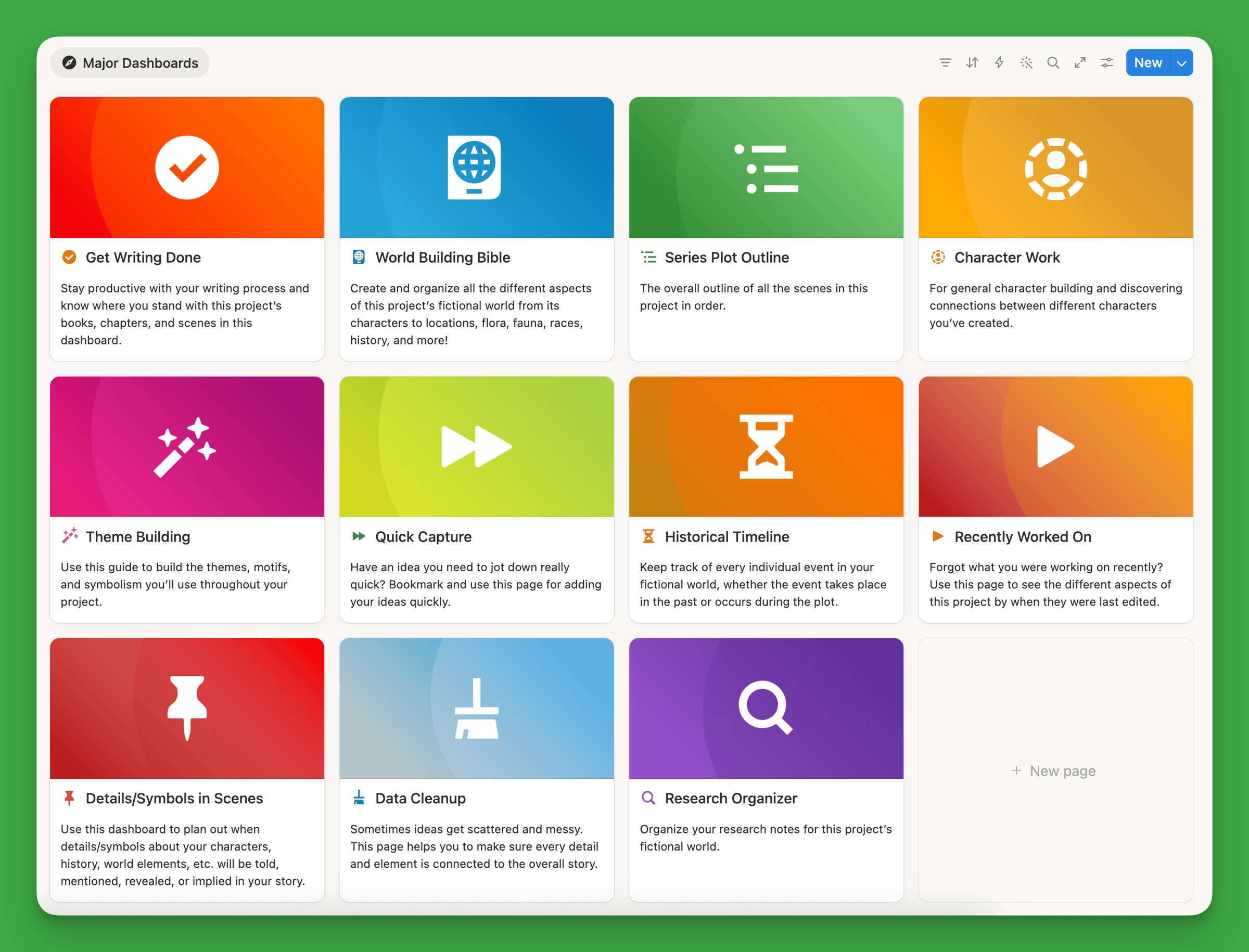
And if you want all five forces stacking together — chapter after chapter, story after story — you need a system, not more willpower.
If you’re tired of starting over every time you sit down to write, the Storyteller OS gives you the infrastructure your story has been missing. Built in Notion, designed for fiction writers who think in systems. See what’s inside the Storyteller OS.
↳ Want the full breakdown first? How I Used Notion to Build the Ultimate Storytelling System

Contents